

The surgery is over, and for many families that is when the real questions begin. How long will the hospital stay be? Will speech or movement come back? What is normal, and what is a reason to call someone?
Recovery after brain tumour surgery looks different for everyone, because it depends on where the tumour was, how much was removed, and the person’s health beforehand. What follows is a general picture, written to help you ask better questions. If you are searching for a neuro oncologist near me to plan follow-up care, you will find practical advice on that too. And if you are still sorting fact from fiction about the operation itself, this guide to brain surgery myths and reality is a useful companion.
The First Hours: Recovery Room and Intensive Care
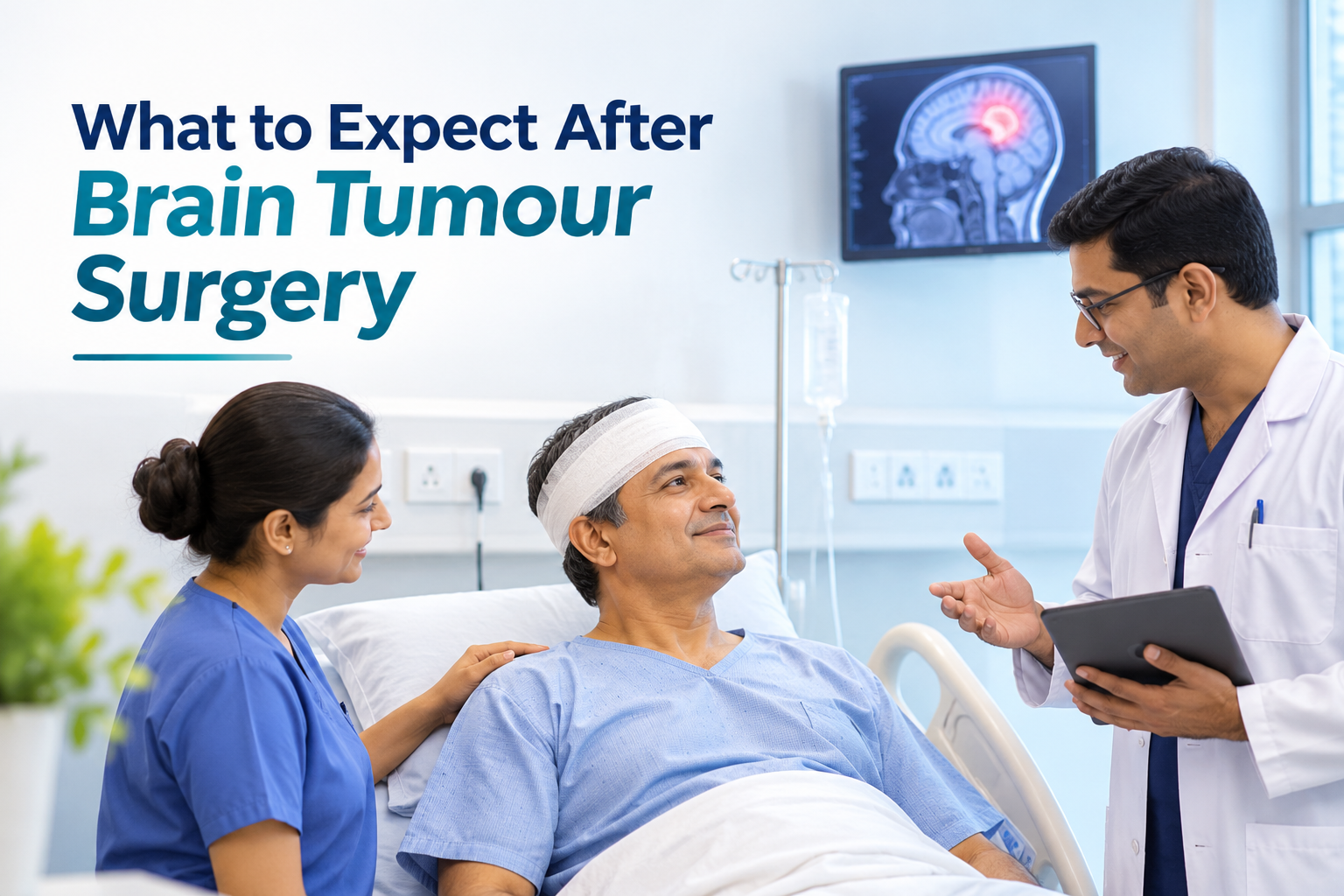
After the operation, most patients are watched closely in a recovery area or an intensive care unit (ICU) or high-dependency unit, usually for a day or two. This is routine, not a sign that something went wrong.
Nurses will check alertness, pupil response, speech, limb strength and vital signs every hour or so. You may be asked simple questions: your name, the date, to squeeze a hand. It can feel repetitive, but it helps the team spot changes early.
Expect a bandage on the head, possibly a drain to remove fluid, a catheter and drips. You may feel groggy, sore and confused for a while. Waking up in a strange place is disorienting, and a familiar voice from a family member helps.
Common Things That Happen in the First Week
Swelling, headache and fatigue
Some swelling around the surgical site is expected. Doctors often prescribe steroids to bring it down, along with pain relief. Headaches and tiredness are common. Many people sleep far more than usual, and that is the body healing.
Facial swelling and bruising
Swelling around the eyes can appear a few days after surgery, sometimes enough that the eyes are hard to open. It usually settles within a week or so.
Seizure precautions
Many patients are given anti-seizure medicine, either as a precaution or because they had seizures before surgery. Take it exactly as prescribed, and never stop it without asking your doctor.
Changes in thinking, speech or movement
Some people notice temporary weakness, trouble finding words or slowed thinking, depending on where the surgery took place. Some of this improves as swelling goes down. Some needs rehabilitation. Your team can tell you what to expect based on your scans and the area involved.
Mood
Low mood, irritability, tearfulness or anxiety are common, and not a sign of weakness. Steroids can also affect sleep and mood. Tell the doctor if this feels heavy.
The Hospital Stay and Going Home
Stay length varies with the type of surgery and recovery. Many people go home within several days to about a week, but some need longer. Before discharge, the team usually checks that you can eat, drink, walk (with help if needed) and manage your medicines.
Ask for the following in writing before you leave:
- A list of all medicines, with doses and timings
- Warning signs that need urgent care
- The date of your first follow-up
- A contact number for the ward or surgical team
- Instructions on wound care
If you want a rough rule: do not leave without knowing who to call at 2 a.m.
Wound Care at Home
Keep the incision clean and dry as advised. Do not pick at stitches or staples, and avoid putting creams or home remedies on the wound unless your surgeon says so. Hair will regrow, though the timing differs.
Call your doctor promptly if you notice redness spreading, pus, fluid leaking from the wound, a fever, or the wound opening.
When to Seek Urgent Help
Go to the hospital or call your doctor immediately for:
- A seizure
- A severe or rapidly worsening headache
- Repeated vomiting
- New weakness, confusion or unusual sleepiness
- Worsening speech or vision
- A stiff neck with fever
- Clear fluid leaking from the nose or wound
Better to be told it was nothing than to wait.
Rehabilitation: The Part That Gets Underestimated
Rehabilitation often starts within days. Depending on your needs, the team might include:
- Physiotherapy for strength, balance and walking
- Occupational therapy for daily tasks such as dressing, cooking or returning to work
- Speech and language therapy for speaking, understanding and swallowing
- Neuropsychological support for memory, attention and planning
Progress is rarely a straight line. Good days and flat days both happen. Small gains, like walking a little further or finding a word more easily, are worth noticing.
Tiredness, Memory and Emotions in the Weeks That Follow
Fatigue is one of the most common complaints, and it can last for weeks or months. Short rests, gentle walks and a steady routine help more than pushing through.
Some people also notice trouble concentrating or remembering. Notes, phone reminders and a daily planner can ease the load. Tell your doctor if it interferes with work or safety.
Families sometimes find that the person recovering seems “different” for a while. Patience matters, and so does asking for help. Counselling is not only for the patient; caregivers need it too.
Results, Pathology and the Next Steps
Tissue removed during surgery goes to a pathology lab. The report, which can take days to a couple of weeks, confirms the tumour type and grade and may include molecular testing. This guides what comes next.
Depending on the result, the plan might be follow-up scans only, radiotherapy, chemotherapy, targeted therapy, or a combination. A post-operative MRI is often done to see how much of the tumour was removed. A tumour board, where specialists review the case together, helps shape the plan.
Do not hesitate to ask: What did the report show? What is the plan? How often will I need scans?
Finding a Neuro Oncology Doctor Near Me
A neurosurgeon performs the operation, while a neuro-oncologist usually manages the medical treatment and long-term follow-up. If you are searching for a “neuro oncology doctor near me”, a few checks will help:
- Verify registration. In India, doctors should be registered with the National Medical Commission or a State Medical Council.
- Look at the whole team. Neurosurgery, radiation oncology, imaging, pathology and rehabilitation working together makes care smoother.
- Ask about a tumour board. It is a reasonable question.
- Seek a second opinion if you feel unsure. It is normal and accepted.
- Be cautious about advertising. NMC rules do not allow doctors to advertise, solicit patients or promise guaranteed results. A “100% cure” claim is a warning sign.
The Behind-the-Scenes Side of Recovery
Good recovery depends on small things running on time. Medicines must be in stock, imaging has to be booked, and pathology samples need to reach the lab safely, sometimes in another city.
Hospitals rely on an order management system to keep supplies, prescriptions and test requests organised, and on reliable logistics tracking to make sure samples, reports and scan files move between departments without delay. Patients rarely notice when it works. They notice when it doesn’t.
Newer surgical methods also play a part in how smoothly recovery goes for some patients. You can read more in this overview of technological innovations in neurosurgery.
Practical Tips for Home Recovery
- Take medicines on schedule and keep a written list
- Rest, but move gently as your team advises
- Eat regular, balanced meals and drink enough water
- Avoid driving until your doctor says it is safe, which is especially important after seizures
- Avoid alcohol unless your doctor approves
- Keep every follow-up appointment, even if you feel well
- Write down questions before each visit
- Ask friends and family for specific help, such as meals or lifts to appointments
Frequently Asked Questions
How long does recovery take?
It varies widely. Some people feel much better within weeks, while full recovery, including energy and thinking, can take several months or longer. Your team can give you a more personal estimate.
Will I need further treatment after surgery?
Not always. It depends on tumour type, grade and how much was removed. Pathology results will guide this.
When can I return to work?
It depends on your job, recovery and any ongoing treatment. Ask your doctor, and consider a phased return.
Is feeling emotional normal?
Yes. Many patients and families feel anxious, sad or overwhelmed. Talking to a counsellor or support group can help.
The Final Word
Recovery after brain tumour surgery is rarely quick and rarely a straight line. But it is easier when you know what is normal, what is not, and who to call. Keep your follow-up appointments, build a good care team, and give yourself room to heal.
If you are looking for a neuro oncologist near you, start with verified registration, a team that works together, and honest answers. That is where good follow-up care begins.
Disclaimer: This article is for general education and does not replace professional medical advice, diagnosis or treatment. Please consult a qualified, registered doctor about your own health.