

A headache that won’t go away. A relative who suddenly can’t find the right words. The usual explanation is something mundane like stress, lack of sleep or weak eyesight.
But sometimes there just isn’t. That is where neuro-oncology comes in, “sometimes”. It is the branch of medicine concerned with tumours of the brain and spinal cord and if I had to summarise what the speciality has learnt over the years it would be this: finding a tumour early gives people more choices.
If you’re reading this because you googled “neuro oncologist near me” after a scan or a scare, I’m sorry you’re here. I’ll try to be clear. We will talk about what neuro-oncology is, what symptoms should be taken seriously, how the diagnosis is made, and how to choose a doctor without being influenced by advertising.
What Neuro-Oncology Covers
Neuro-oncologists are doctors who treat tumours of the central nervous system. Others start in the brain or spinal cord. Others start elsewhere, usually in the lung, breast or skin, and later spread to the brain. These are known as secondary or metastatic tumours and they are actually more common in adults than tumours which start in the brain.
The most aggressive is glioblastoma, and the group most people have heard of is gliomas. Meningiomas develop from brain membranes and are typically slow. Pituitary tumours screw up hormones. Medulloblastoma is a childhood cancer. Tumours of the spine often begin with back pain or tingling in the legs.
You will hear the word “benign” a lot and it is a relief. But a benign tumour in a tight spot can cause trouble, because there is no spare room in the skull. Often, where a tumour is located matters as much as what type it is.
Why Early Diagnosis Matters
As a tumour increases in size, it begins to exert pressure on the brain tissue, which causes the tissue to swell. When pressure builds up to a certain point, the brain tissue in the immediate area misfires, resulting in noticeable changes in vision, speech, balance, or memory.
It is generally easier to manage smaller tumours since surgeons might find it easier to remove the entire tumour while preserving healthy tissue, and the radiation can be focused more accurately. In some situations, it is better to monitor the tumour instead of attempting to remove it.
When diagnosis comes late, the conversation is usually about comfort and functioning rather than survival.
However, I want to be cautious in this regard. I won’t throw out statistics because they vary widely depending on a tumor’s type, grade, certain genetic features, age, and general health conditions. A number from a textbook may create irrational fears or illusions. Consult your own specialist to find out how your particular situation looks.
Symptoms Worth Taking Seriously
There is no single sign that indicates “tumor,” which makes it very complicated. The following symptoms are, in most cases, more likely to occur due to migraine headaches, stress, eye strain, or low hemoglobin levels. However, if you are experiencing any of the following symptoms for the first time, if they are not going away, or if they are getting worse, it is worth getting checked:
- Headaches that are getting more severe or that are especially strong in the morning
- A seizure, particularly if you have never had one before
- Vomiting without a gastrointestinal problem
- Doubled or blurred vision
- Unilaterally weak or numb body parts
- Slurred speech or inability to talk
- Memory loss or a personality change that family members want to notice
- Coordination problems and falling without any reason
The family is usually the first group of people to notice that a person has experienced a change in personality. There may be a father who has been calm and collected but who now seems irritable. A mother who was once very talkative may drop the habit of talking altogether. Should any of your loved ones show signs of change, it is important to approach the doctor. One should note that a sudden and very intense headache, convulsions, muscular weakness, or a drop in awareness level are considered emergencies, and one should not waste time waiting for an appointment.
How Diagnosis Works
The process generally begins with an appointment at a general practitioner or neurologist who will question the patient regarding the time of the onset, the patient’s condition and the family history of similar problems. He will perform an examination measuring data such as the patient’s reflex, strength, eye movements and memory etc.
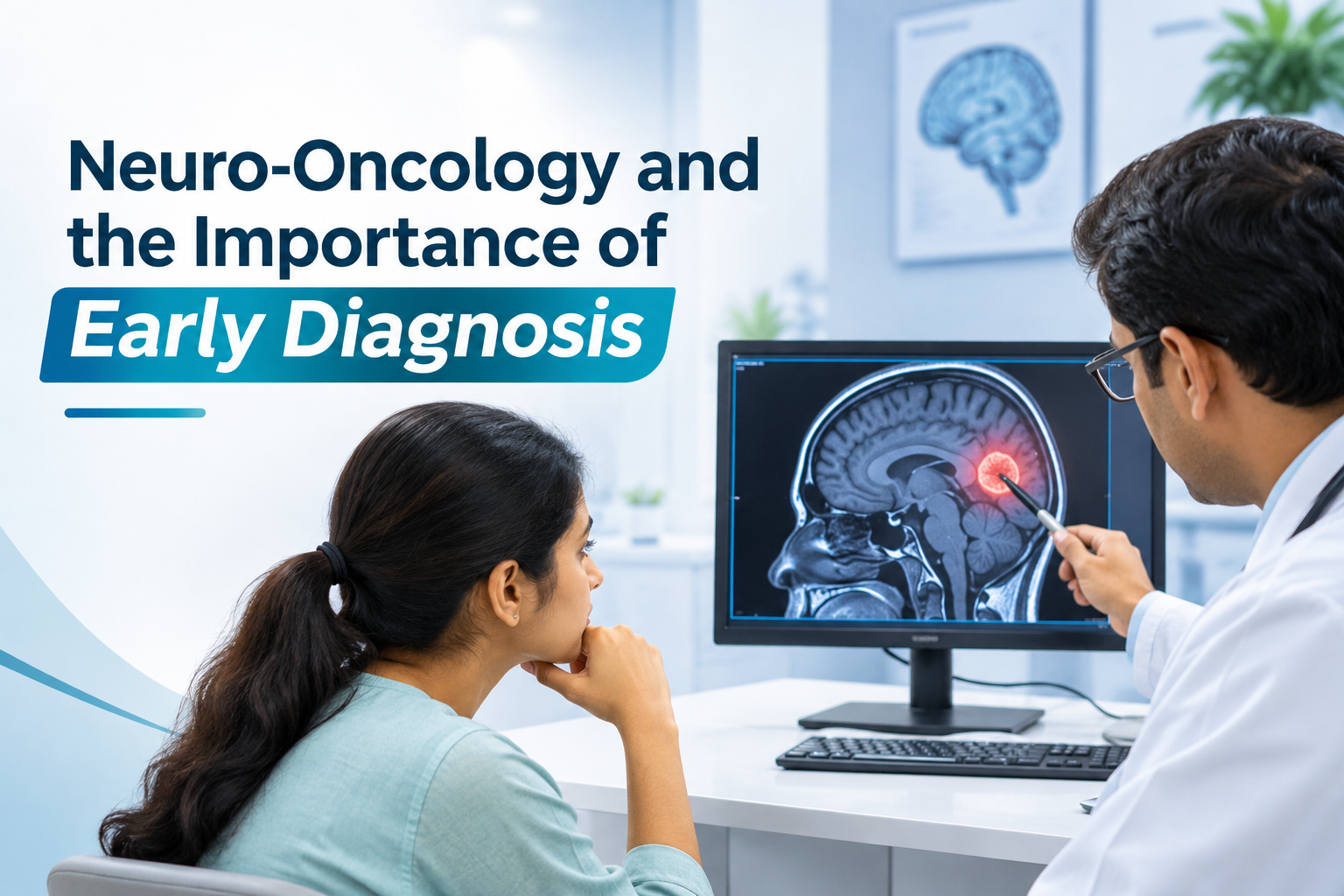
If the doctor reveals any possible abnormalities, the patient undergoes imaging. The MRI with contrast is more widely used in the diagnosis of the tumors of the brain and spinal cord since the results of this study reveal important information concerning the size and localization of the tumor. CT is quicker, thus, is often performed in the situations requiring urgent surgery.
A scan alone won’t provide the conclusive information. A tissue sample, gathered via surgery or biopsy, is required for that. A pathologist analyzes the tissue sample under a microscope to find IDH mutation, MGMT methylation, and 1p/19q codeletion. Genetic research is essential in classifying the type of the tumour and making a decision regarding the treatment, according to WHO’s updated classification of CNS tumours of 2021.
The data from the research is then presented at a tumour board meeting at a good facility. A neurosurgeon, a neuro-oncologist, a radiation oncologist, a radiologist, and a pathologist discuss the findings together and come to a conclusion about the treatment. Ask your medical provider if this takes place in your case.
Treatment, in Plain Terms
When it is safe, surgery is performed first. This is either to remove most of the tumour or to obtain a specimen. Radiotherapy is then used in a number of cases, with modern methods noted for their ability to protect normal tissue compared to those of earlier times. Chemotherapy such as temozolomide for certain gliomas may be used as well if needed. If tests reveal a certain genetic change, oncologists may recommend using targeted therapy.
Then there are all matters related to the tumour: seizure medications, steroids for swelling, physiotherapy, speech therapy, consultations. People tend to regard these matters as extras. They are important. Postoperative recovery may take a number of months, and family members need assistance just as much as the immediate patient.
Follow-up examinations are important even if everything feels alright, because they serve to detect recurrences.
Finding a Neuro Oncology Doctor Near Me: What to Check
Typing “neuro oncology physician in my vicinity” on a web browser provides a list of names. There is no guarantee that accuracy of any name on that list hence it should only be taken as a preliminary step.
Firstly, the registration status should be verified. In India, the doctors must be registered with the National Board of Medical Registration or the State Board of Medical Registration whose information can be confirmed through the public record.
Secondly, the hospitals should be checked in totality. The surgery for cancer tumors is conducted in hospitals where the major services of neurosurgery, radiotherapy, imaging and pathology are conveniently located.
Thirdly, if you doubt anything, go for a second opinion—it is a common practice regarding brain tumors and it is something that any competent physician will respect.
Fourthly, keep all your records with you: scan discs, reports, digital copies, and history of diseases. Absence of documents will lead to waste of time.
And one more word on advertisement: according to the NMC rules, it is prohibited for the doctors to advertise and promise any guaranteed results. So if a hospital claims to perform a “100% cure” or calls itself “the best clinic in India,” it is time to be cautious. Doctors who are really honest often state “it depends.”
The Hidden Side of Good Care
The patients generally do not see what goes between “we need a scan” and “here is your plan”. The contrast agent needs to be on hand. All of the items to operate need to be provided on time. Sometimes the biopsy sample travels to the pathological laboratory in another city.
Hospitals use systems, for example, order management systems to organize all the requests for tests, pharmaceutical products and surgical material so that nothing is forgotten. The reliable logistic process performs a similar mission with samples, reports and scans while they are being moved across various departments of the hospital or the laboratory. Although nobody is writing any notes of thanks to these people, many days were saved on the way to diagnosis thanks to their work.
Small Habits That Help
Maintaining a record of your symptoms includes things like the date and time along with things like how long the symptom lasted and what you were doing. This is much more helpful for the doctor compared to just saying “I haven’t been feeling well.”
Avoid nights spent browsing through forums. These are disconcerting and will often lead you either into a panic or illusory comfort.
Make sure you write down any questions you think of before your appointment. You will forget them once the doctor walks in. What type is it? What grade? What options do I have? What happens if I wait?
Reach out to someone- be it a friend, a therapist or a support group. No one should go through this alone.
Frequently Asked Questions
Do all headaches require a brain imaging test?
Not necessarily. Most headaches do not come from tumours. Physicians typically recommend an imaging test for a headache if it’s a new headache, presenting severe symptoms or exhibiting neurological symptoms.
Can brain tumours be treated?
It depends on the type and grade of the tumour, as well as the location and the patient’s health status. Some benign brain tumours can be cured completely, while some others need to be watched for many years. Your doctor can give you a source of realistic expectations.
Is the neuro-oncologist the same as the neurosurgeon?
No. The neurosurgeon does the operation, while the neuro-oncologist manages medical issues associated with the brain tumours, including chemotherapy and planning for the treatment.
The Final Word
Early diagnosis does not ensure success, but what it does give you is time, choices, and chance to preserve the way you have lived your life so far.
Thus, if you notice new symptoms that do not go away or only worsen, be sure to check them with a qualified doctor. Find out whether imaging is necessary if recommended by the doctor and get a second opinion in any case of doubts. When searching for local neuro-oncologists, make sure they have proper accreditation, a good team, and provide an honest response.
Disclaimer: This article is a source of information only and does not replace medical advice or guidance.